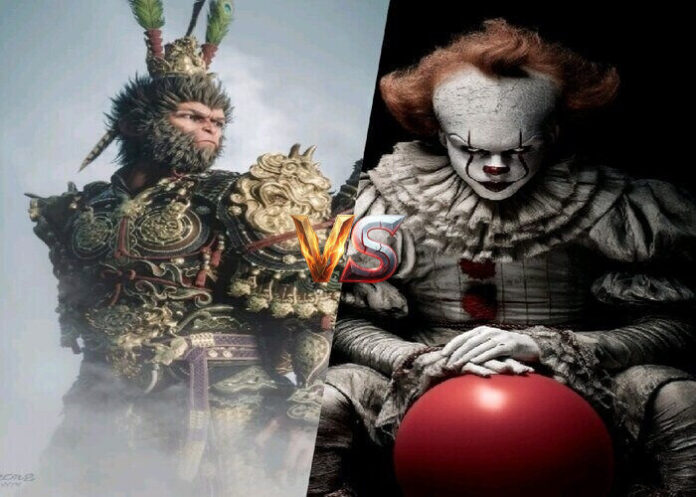
👑 The Victorious Sage: A Definitive and Critically Reasoned Evaluation of Sun Wukong
Sun Wukong, the Monkey King of Wu Cheng’en’s 16th-century masterpiece Journey to the West, stands at the crossroads of myth, satire, and spiritual allegory. He is a creature of Taoist rebellion, Buddhist awakening, and folkloric wit, wrapped inside the symbolic “Mind Monkey” that represents the restless human mind searching for discipline. This evaluation relies on canonical material first, with cultural interpretations added only where appropriate. It examines his abilities, his evolution, his inner flaws, and the novel’s deliberate use of narrative looseness to highlight themes rather than strict power quantification.
The Core Arsenal and Taoist Foundation
Wukong enters existence through a marvel of cosmology. A stone on Mount Huaguo absorbs heavenly forces until it bursts, giving life to a stone egg that hatches into the immortal monkey. This cosmic birth gives him durability before he ever lifts a weapon. His transformation deepens after studying under Patriarch Subodhi, learning the secrets of Taoist immortality and magical combat. Heaven underestimates him, bureaucracy tries to tame him, and satire becomes the stage where he rebels.
The highlights:
Ruyi Jingu Bang
This legendary weapon comes from the East Sea Dragon Palace, originally used to stabilize ocean depths. It carries the stated weight of 13,500 jin, which aligns to roughly 8.06 metric tons using Ming-era mass standards. But the number carries symbolic intent more than literal engineering. In practice, the staff shrinks to a pin or expands to celestial scale, depending on need. It is both weapon and identity.
Cloud Somersault
The 108,000 li leap lets him travel tens of thousands of kilometers in a flip. It is fast, elegant, and deeply Taoist in its freedom. In battle, however, mobility can be intercepted by sufficiently powerful beings, proving it is not absolute.
The 72 Earthly Transformations
These transformations form the backbone of Wukong’s versatility. He can fly, shapeshift, manipulate elements, become invisible, and create bodies from his hairs. The technique’s limits appear around higher deities who sense disguised auras or scents. But against lower threats, Wukong becomes an entire army on his own.
The infamous early moment that triggers his rebellion is the heavenly job of Bimawen, a stable-hand post masked behind a title that sounds dignified. When he realizes he has been tricked with a pun that demotes him, fury erupts. His pride blazes. Satire sharpens. And the title Great Sage Equal to Heaven is born from insult rather than glory.
Stacking Immortality: The Unkillable Paradox
Wukong’s durability is layered like mythic armor. Each tier removes a way for the universe to kill him.
Innate Immortality
Stone-born bodies do not age. Subodhi’s teachings grant eternal life and rapid regeneration.
Divine Consumption
He eats Peaches of Immortality, drinks Golden Elixirs, and survives Laozi’s furnace for seven weeks. These layers harden him into a near-indestructible being who resists lightning, blades, and fire.
Erasing His Death Registry
When he wipes his name from the Underworld’s Book of Life and Death, he denies even metaphysical bureaucracy any claim over him.
Conceptual Resistance
He resists time, soul manipulation, and natural death cycles. But higher cosmic powers remain above him. Tathagata Buddha subdues him not through strength but through cosmological authority, demonstrating that the novel is more concerned with spiritual hierarchy than physical dominance.
His belief in his own invincibility leads directly to his downfall. After challenging heaven and declaring himself beyond all judgment, he ends up trapped beneath Five Elements Mountain for 500 years. The imprisonment is both punishment and purification. He rants, he jokes, he complains of hunger, but slowly the stillness begins to tame the chaotic mind that once believed itself limitless.
Full Strength Ceiling and Transcendent Feats
Wukong’s feats stretch between myth, comedy, and allegory. They are enormous yet flexible, varying slightly between editions but always meant to reveal insight rather than literal measurements.
Mythic Strength
He lifts mountains, crushes armies, and easily overwhelms celestial troops. During the Havoc in Heaven, he stands against 100,000 soldiers, outmaneuvers Nezha, clashes with the Four Heavenly Kings, and refuses to fall even when Heaven throws execution methods at him like a frustrated cook throwing pans.
Cosmic Scale Techniques
He uses the Heaven and Earth Body technique to grow into a towering giant, battling demons as a living mountain.
Intelligence and Alchemy
His problem-solving is clever and slightly chaotic. He diagnoses illnesses using unexpected methods and crafts unconventional remedies. But his temper undermines him. When denied Ginseng Fruits, he destroys the sacred tree in anger, showing how ego often drags down even his brightest moments.
The Buddha’s Palm
One of the most defining moments comes when he tries to outrun Buddha himself. He somersaults across what he believes is the edge of the world, only to find himself still within Buddha’s palm. It is not defeat; it is revelation. The universe is bigger than Wukong’s pride. This realization sets the stage for his long path toward humility.
Critical Flaws and Narrative Limits
The Monkey King is mighty, but not flawless. His weaknesses keep the story balanced and force emotional growth.
Fiery Golden Eyes Sensitivity
After the furnace, he gains the power to see through illusions but becomes vulnerable to smoke and certain winds. Opponents exploit this whenever possible.
Water Limitations
He performs poorly in deep water without specialized spells. His companions often take the lead during aquatic missions, reinforcing that the pilgrimage requires cooperation rather than raw might.
The Golden Circlet
The circlet that tightens around his head is the perfect embodiment of discipline. Guanyin orchestrates its placement, Tang Sanzang activates it, and Wukong hates it at first. But over time, the pain it brings becomes internal guidance. Its removal later marks the moment he no longer needs external restraint.
The Six-Eared Macaque
This doppelgänger challenges Wukong’s identity and symbolizes the illusions of ego. Since even divine authorities cannot tell them apart, the story gently mocks heavenly bureaucracy while guiding Wukong toward confronting his own shadow.
Reflective Demonic Encounters
Many demons mirror his flaws. His old sworn brother, the Bull Demon King, exposes his impulsive loyalty. The White Bone Demon mirrors his own shapeshifting tricks. Repeated conflicts are part of a structured spiritual curriculum designed to break through the Monkey King’s pride.
These weaknesses shape the master-disciple bond at the heart of the story. Tang Sanzang’s compassion stands in direct contrast to Wukong’s instinctive violence. And their dynamic becomes a slow dance where raw power learns restraint, while pure virtue gains a shield strong enough to survive the world.
The Transcendent Final Form: Victorious Fighting Buddha
The pilgrimage ends after 81 tribulations. The number itself carries layers of spiritual meaning. It is mathematically perfect, symbolically complete, and deliberately constructed. When the companions fall short of the total, a final trial is quietly added, and the narrator even jokes about it with a wink.
Through these trials, Sun Wukong transforms.
He becomes the Victorious Fighting Buddha. The circlet disappears. His service becomes voluntary. His mind finally quiets. The monkey that once fought against heaven now fights for enlightenment with full clarity.
The novel leaves his post-enlightenment duties open to interpretation. Traditional readings place him below Tathagata in rank but within the enlightened hierarchy. Broader philosophical readings argue that enlightenment equalizes all Buddhas in essence. Canonically, he completes his mission, ascends, and joins the Western Paradise.
Later sequels and adaptations imagine him returning home or taking on new responsibilities, but the original novel keeps his ending spiritually open.
Comparative mythology places Wukong in dialogue with other tricksters:
- Loki remains chaotic even at the end.
- Hanuman is devoted from the start, without Wukong’s ego struggle.
- Hermes shares his boundary-crossing humor but lacks the same spiritual arc.
Wukong’s emotional journey is uniquely human. He starts as prideful arrogance, sits in centuries of forced stillness, endures misunderstandings with Tang Sanzang, faces the sting of the circlet, survives heartbreak, and eventually awakens to compassion. His rage, humor, loyalty, and regret form one of mythology’s most thoroughly human arcs.
Cultural Context and Enduring Influence
The novel’s satire extends beyond Heaven. It critiques real social structures of Ming China with humor sharp enough to sting. Its demons, deities, and trials double as commentary on corruption and incompetent administration.
Guanyin quietly guides the plot from behind the scenes. She chooses the pilgrims, designs challenges, and nudges events with gentle wisdom. Her presence balances the raw masculine energy of the other deities, giving the novel a subtle but powerful feminine center.
Verse Ranking (Consolidated)
| Tier | Key Figures | Wukong’s Standing |
|---|---|---|
| Transcendent | Tathagata Buddha, Laozi | After the pilgrimage he becomes an enlightened protector who still respects the greater cosmic hierarchy |
| High | Jade Emperor, Erlang Shen, Guanyin | Before his sealing he can fight them or match them, but the higher beings defeat him through strategy or metaphysical authority |
| Mid | Nezha, Four Heavenly Kings, Bull Demon King | He generally overpowers them with little difficulty |
| Low | Mortals, Minor Spirits, Companions | He is essentially untouchable and often carries entire conflicts by himself |
These tiers reflect narrative symbolism rather than rigid battle statistics.
Final Assessment
Wukong’s arc moves from chaotic rebellion to enforced stillness, from reluctant obedience to genuine compassion, and finally to enlightened clarity. The story around him is aware of itself. It jokes, comments, bends rules, and plays with structure. The result is a myth that is both entertaining and spiritually enriching.
His legacy runs through opera, folklore, modern nationalist imagery, global media, and philosophical debate. The Monkey King has become a cultural shorthand for transformation, rebellion, discipline, and the potential hidden inside the restless mind.
He represents a universal truth: the journey to mastery is messy. It is loud. It is painful. But it is also possible. And that possibility, once realized, becomes the heart of his immortality.
Key Points
- Immortal Origins
Sun Wukong starts life in the coolest way possible by hatching from a stone egg on Flower Fruit Mountain He is one of the four spiritual primates and comes fully loaded with natural wisdom and magic Basically he spawned into the world already on cheat mode - Taoist Mastery
He trains under the mysterious Patriarch Subodhi where he learns the famous 72 transformations cloud somersaulting that covers ridiculous distances and earns a few layers of immortality along the way It’s like attending spiritual university but graduating with every superpower in the catalog - Heavenly Rebellion
Wukong storms Heaven fights Nezha and Erlang Shen to standstills and goes on a full celestial shopping spree with peaches and pills He crowns himself Great Sage Equal to Heaven proving confidence is also a superpower sometimes - Ruyi Jingu Bang
His staff weighs a lot can shrink to a sewing needle and can grow into a skyscraper sized beatstick If there was ever an all purpose weapon this is it - Golden Eyes
After surviving a heavenly furnace he ends up with vision that can cut through illusions and see across miles Basically ancient built in zoom and lie detector in one package - Clone Army
He can pluck a hair and create thousands of clones The ultimate solution when you need backup or when you just want to overwhelm your enemies with thirty thousand versions of yourself - Diamond Body
Wukong is basically indestructible He survives blades fire lightning heavenly punishments and even an immortal cooking pot His durability stats are maxed out - Pilgrimage Role
He protects Tang Sanzang through eighty one trials wearing the tight headband and fighting everything from demons to monsters to overly confident spirits He’s the bodyguard every traveler wishes they had - Buddhist Ascension
After a journey of redemption he becomes the Victorious Fighting Buddha showing that even the most chaotic troublemaker can glow up spiritually - Narrative Peak
His havoc before being sealed shakes Heaven while his power after enlightenment becomes more mysterious and philosophical Less about raw strength and more about transcending it
Fun Facts
- Real Life Inspirations
Wukong mixes influences from Hanuman older Chinese monkey folklore and artistic motifs from early dynasties His character evolved from many cultural streams not just one story - Wu Cheng’en uses Wukong to poke fun at the bureaucracy of his time turning the novel into both an adventure and a satirical comedy
- Clone Math
Each hair equals one clone which means an entire monkey militia was possible long before anime started doing it - Leap Physics
His cloud jump covers about the Earth and more in one flip Obviously not real world physics but definitely peak legendary exaggeration - He spent five hundred years under the mountain The fact that his staff stayed with him still in perfect condition says a lot about magical warranty policies from ancient times
- Peach Feast
He ate the peaches of immortality before the party even started like someone who shows up early and finishes the buffet - Book of Death Hack
He simply walked into the underworld and erased his name from the death book A bold approach to life extension - In Peking Opera his flips and acrobatics are inspired by his transformations bringing his energy to live performances for centuries
- Erlang Shen Battle
One of his closest matches They shapeshift fight and chase each other until divine intervention steps in - Subodhi names him Sun meaning awakened hinting at wisdom long before he calmed down enough to show it
- Staff Origin
His iconic weapon comes from the Dragon Kings palace originally a pillar used to stabilize the sea Talk about recycling becoming legendary equipment - Modern Tourism Boost
Black Myth Wukong renewed global interest in Flower Fruit Mountain bringing visitors eager to see the real locations tied to the legend - Transformation Durability
Some interpretations see his transformations as extra layers of protection though the novel never counts exact numbers - Fiery Gaze
The furnace gave him golden eyes able to see demons illusions and tricks The ancient fantasy version of night vision and x ray vision combined - The Bull Demon King story shows how teamwork and creativity could solve what raw strength alone couldn’t
- Wukong inspired drinks
His influence reaches modern culture including beer brands that borrow his name or style - Horse Taming
His early heavenly job in the stables becomes surprisingly useful later on when dealing with magical creatures - The Buddha bet challenge shows the playful side of myths reminding readers that even cosmic beings can have comedic moments
- Some real world festivals show thematic influences from monkey deities though not directly depicting Wukong himself
- His final title hints that even after enlightenment he stays active and involved maintaining his warrior spirit in a more divine form
Comedy Corner
- Wukong jumping 54000 km in one flip is basically that one friend who says I’ll be there in five minutes but they’re actually already outside
- His staff changing size feels like the ancient world’s version of a foldable selfie stick but actually dangerous
- The moment he erased his name from the death book every student wished they could erase their exam scores the same way
- The peaches of immortality were clearly meant for a royal banquet but Wukong treated them like free samples at a mall
- Five hundred years under a mountain and he still came out energetic meanwhile some people take a nap and wake up tired
- When he made thousands of clones it was the original group chat chaos except every contact is just himself
- His furnace boosted vision is basically premium subscription eyesight see through illusions no ads included
- Tang Sanzang ringing the headband spell is the earliest example of let me adjust your attitude settings manually
- Wukong when Heaven sent 100,000 soldiers after him: “Ah, yes. Customer service has arrived, aggressively.”
- Tang Sanzang trying to keep Wukong calm: “This trip would be so peaceful if the world stopped producing demons every 15 minutes.”
- The Golden Circlet tightening: “When your boss doesn’t raise your salary but increases your responsibilities.”
- Wukong’s Cloud Somersault: “The original ‘I’m on my way’ text , except he actually arrives in one flip.”
- When Wukong eats the Peaches of Immortality: “He didn’t just eat lunch. He ate the entire HR department’s morale.”
- White Bone Demon switching forms again: “When someone thinks changing their username will fix their reputation.”
- Buddha catching Wukong inside his palm: “Peak moment of ‘I thought I ate, but truly, I was the snack.’”
- Wukong enduring the furnace for seven weeks: “Ultimate proof that when life turns up the heat, real legends come out with glowing golden eyes.”
- The Bull Demon King seeing Wukong pull hair clones out again: “Sir, this is a group project, not a duplication contest.”